
Why Rodents Move Indoors as OC Temperatures Drop
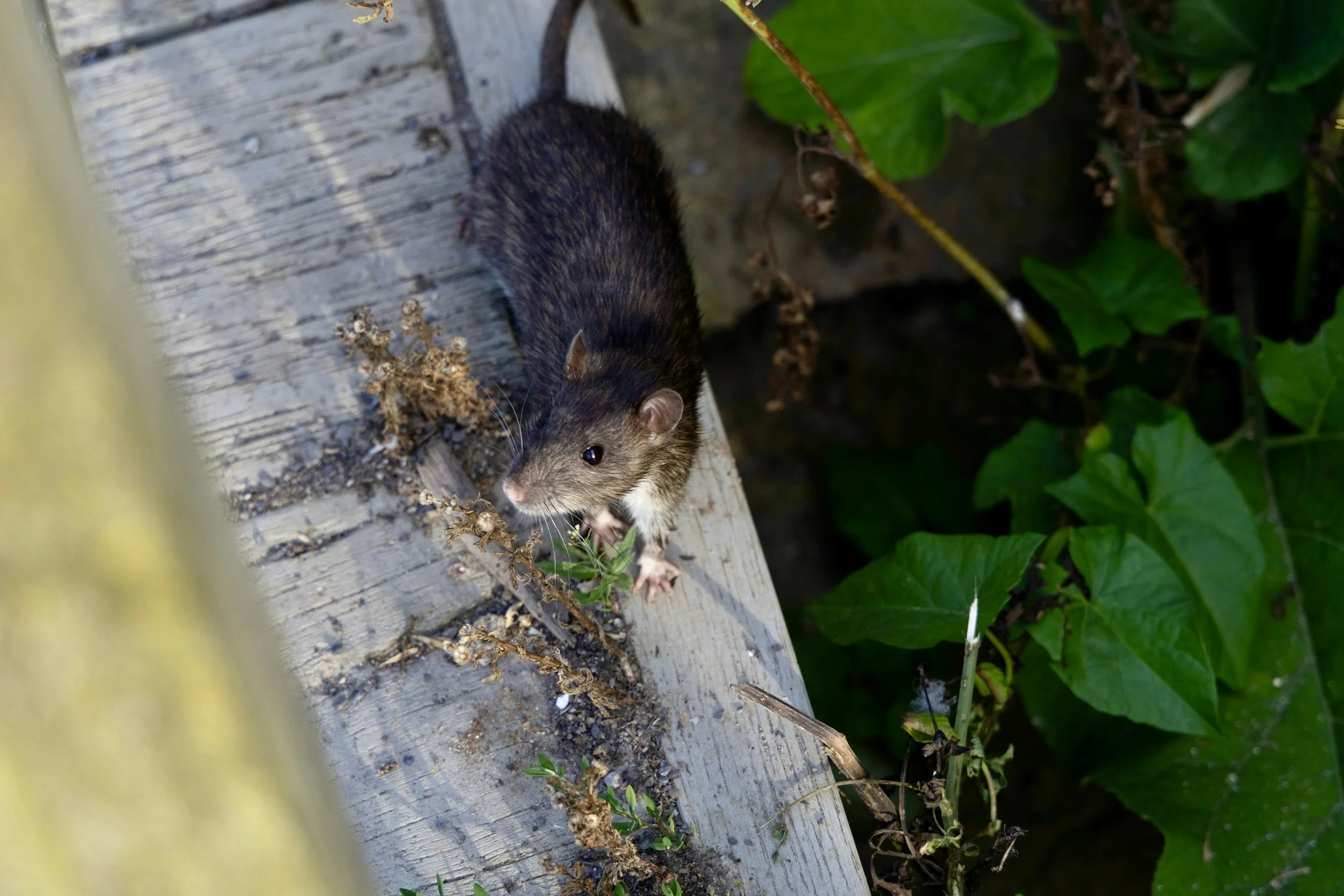
Rodents are not trying to get into your house. They are following three things, and in the fall your house is where all three happen to be: steady warmth, reliable water, and food that does not run out. Once Orange County nights drop into the fifties and the landscape starts drying back, your attic beats a hillside. That is the whole mechanism, and because it is predictable you can get in front of it. Our rodent control and exclusion service handles the sealing and trapping side, but knowing why they come helps you know where to look.
The three things they are actually after
Break it down and rodent behavior stops being mysterious.
Warmth. Rats and mice do not hibernate. They have to stay warm through winter, and they burn energy fast to do it. A wall void with insulation, a warm attic above a heated house, the cavity behind a water heater, the engine bay of a car parked overnight. All of those are better than a burrow in cooling soil.
Water. This is the one people overlook, and in a dry climate it is often decisive. A dripping hose bib, a leaking irrigation head, a condensate line, a pet bowl left out, a toilet supply line sweating in a closet. A rodent that finds reliable water nearby is far more likely to settle in and nest rather than pass through.
Food that does not stop. Through summer, outdoor food is everywhere: fruit, seeds, insects, garden produce. Come fall it thins out. Meanwhile your pantry, your pet food bag, your trash can, and your bird feeder are all still fully stocked. Rodents need very little. A mouse gets by on about three grams a day, which is a few crumbs.
Add a fourth if you like: cover. Rodents hate crossing open ground where they can be seen, so dense ground cover, ivy on the foundation, stacked firewood, and cluttered garage corners are the roads that get them to your wall in the first place.
What the fall calendar actually looks like here
Orange County has no hard freeze, so the pattern is a shift rather than a spike.
Through September the pressure builds outside. Landscape irrigation gets reduced, soil dries, and outdoor food sources thin. Rodents start ranging further to feed, which means they start finding your property.
In October, nights cool and the Santa Ana winds move through. This is when the exploring turns into entering. It is also, not coincidentally, when we start getting the season's first attic calls.
By November, the first rains arrive and flood burrows and drainage channels, which pushes rodents up and out. This is peak entry month in most of the county.
Through December and January they are established and breeding. A pair that got in during October can be a real colony by February, because roof rats can produce several litters a year and a female matures in about three months.
That timeline is why the same prevention work is easy in September and expensive in January. You are not racing the weather, you are racing the breeding cycle.
The rat you probably have climbs
This matters more than anything else on the page. In Orange County the common rat is the roof rat, not the Norway rat.
Roof rats are excellent climbers. They use tree limbs touching the roof, fence lines, bougainvillea and ivy, stucco texture, and utility lines to get to the roofline, then enter through a roof vent, a gap where the fascia meets the eave, an uncapped chimney, or an unsealed pipe penetration.
Which means most people look in the wrong place. They set traps in the garage and inspect the foundation while the actual door is fifteen feet up. If you want to find the entry point, get eyes on the roofline and the eaves.
House mice are the other common one, and they work low: gaps under doors, foundation cracks, and openings around utility penetrations. A mouse gets through a gap the width of a pencil. A rat needs about the size of a quarter. Both are smaller than most people picture.
The first signs, in the order they usually appear
Catching it early is mostly about knowing what comes first.
Sound comes first, almost always. Scratching, scurrying, or a rolling sound in the attic or a wall, usually shortly after dark or just before dawn. If you hear it, something is already inside.
Then droppings. Along walls, at the back of cabinets, in the garage, in the corners of a pantry. Rat droppings are noticeably larger than mouse droppings, and telling them apart tells you what you are dealing with. Here is how to tell rat droppings from mouse droppings.
Then physical evidence: gnaw marks on wood, wiring, or plastic, shredded insulation or paper used for nesting, dark grease marks along baseboards where they run the same route repeatedly, and a musky ammonia smell in a closed space.
If a pet suddenly stares at a wall or a cabinet for no reason, take it seriously. Dogs and cats notice this well before people do.
Shutting it down before it starts
The prevention work is genuinely simple, it is just physical.
Get the routes off your roof. Trim tree limbs back so nothing touches the roofline, and pull ivy and vines off the walls. This alone removes the road most roof rats use.
Then seal, working high and low. Roof vents, eave and fascia gaps, the chimney, pipe and conduit penetrations, the AC line set, the bottom corners of the garage door, and gaps under exterior doors. Use steel wool packed into caulk for small openings and hardware cloth or metal flashing for larger ones. Skip foam alone and skip plastic, since rodents chew through both without slowing down.
Then take away water and food. Fix dripping hose bibs and leaking irrigation. Move pantry staples and pet food into sealed containers. Latch trash lids. Bring outdoor pet bowls in overnight, which is one of the most reliable rodent draws we find on local properties. Pick fruit up off the ground.
Then clear the cover. Firewood and stored boxes off the ground and away from the house, garage corners cleaned out, ground cover trimmed back from the foundation.
For the full walkthrough with the sequence and the materials, see how to rat-proof your Orange County home before fall.
Why traps alone usually fail
This is the part worth being blunt about. Store-bought traps catch rodents. They rarely end a rodent problem.
Two reasons. First, if there is a nest inside, breeding outpaces trapping, and you are removing individuals from a growing population. Second, and more importantly, trapping does nothing about the opening. Every rodent you catch is replaced by another coming through the same gap, so you can trap for months and never get to zero.
What works is doing both in the right order: find and seal every entry point so replacements cannot get in, then trap out what is already inside, then monitor to confirm it stayed at zero. That is how our exclusion service is structured, and it is the reason it ends problems that traps have been running on for weeks. Our technicians average about ten years in the field, and most of that experience shows up in knowing where to look on a local roofline rather than in anything exotic about the treatment.
Get ahead of the season
If you are hearing anything in the walls or attic, or finding droppings, that is not a wait-and-see situation in October. A small problem now is a much larger one by February.
Call (949) 943-5000 or request a free quote and we will inspect the property, show you what we find and where they are getting in, and give you a straight price before anything happens. If you would rather have the prevention side handled on a schedule, our pest prevention plan includes exterior work and monitoring with no long-term contract.
Frequently asked questions
Why do rodents come inside in the fall?
Because the three things they need shift indoors. Cooling nights make a heated house the warmest option, reduced irrigation and thinning outdoor food push them to look elsewhere, and your pantry, pet food, and trash stay fully stocked. In Orange County this starts in October and peaks after the first rains in November.
What temperature makes rats come inside?
There is no single number, and in a mild climate it is the change more than the reading. Locally, activity indoors picks up once nights fall into the fifties, which is usually October. Rodents do not hibernate, so they need shelter for the whole cool season.
How do rodents get into a house?
Roof rats climb and enter high, through roof vents, eave and fascia gaps, chimneys, and unsealed pipe penetrations, often using a tree limb or vine to reach the roof. Mice enter low, through gaps under doors, foundation cracks, and utility penetrations. A mouse needs a pencil-width gap and a rat about the width of a quarter.
What is the first sign of rodents in a house?
Sound, usually. Scratching or scurrying in the attic or a wall after dark or before dawn. Droppings, gnaw marks, shredded nesting material, and a musky smell come later, once they are established.
Can I get rid of rodents myself?
You can catch some with traps, but if they are nesting inside, trapping alone rarely ends it, because breeding replaces what you catch and new rodents keep entering through the same gaps. Lasting control means sealing every entry point first, then trapping and monitoring.
Do rodents go away on their own in the spring?
Not reliably. Once a colony is established indoors with warmth, water, and food, there is little reason to leave. Homeowners who wait for spring usually end up dealing with a larger population and more damage to insulation and wiring.
