
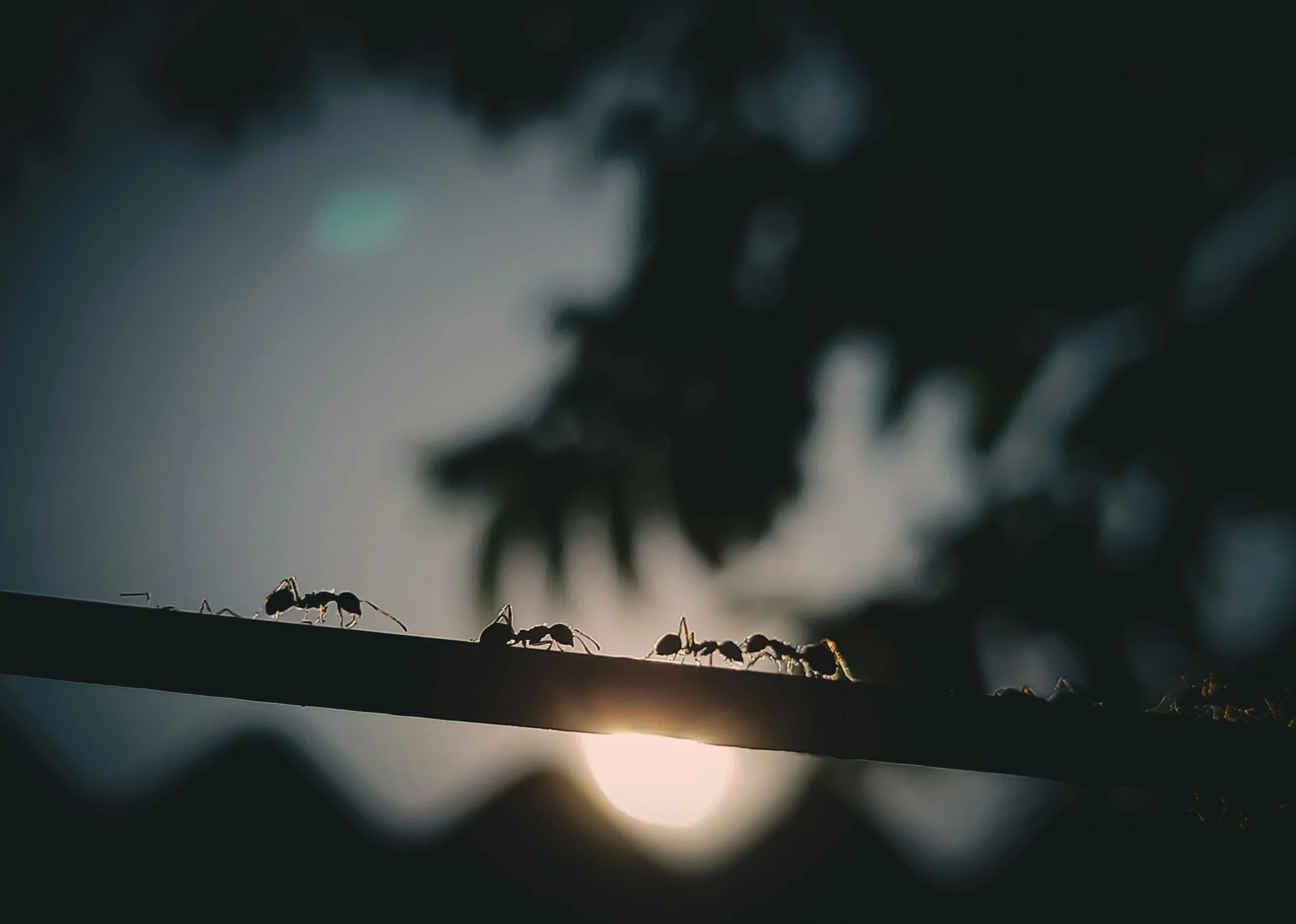
Ants come into the house when it rains because the rain floods their nests.
Most ants in Orange County homes are Argentine ants, and they nest in shallow soil under mulch, pavers, and irrigated landscaping. When that soil gets soaked, the colony moves out, often carrying its queens and young, and looks for somewhere dry with food nearby. Your kitchen checks both boxes.
It happens like clockwork with the first real storms of the season, and here in Southern California that rainy season runs roughly November through March.
The good news is that it is predictable, which means you can get ahead of it. Our ant control service is designed around exactly this kind of colony-level problem.
What is actually happening when ants show up after rain
Two things push them in at once.
The first is water. Argentine ants do not dig deep nests, so a heavy rain soaks the whole colony. They move to higher, drier ground, and wall voids, the gaps under your slab, and potted plants by the door all qualify.
The second is food. Rain washes away the honeydew and other food sources they rely on outside, so foraging ants go looking for something else. They lay a scent trail as soon as they find it, and within hours, hundreds of others follow that trail.
That is why it feels sudden. One morning there is nothing, the next there is a line from the window frame to the sugar bowl.
Ants also come in during hot, dry spells, for the opposite reason: they are looking for water. We covered that pattern in why summer ant invasions get worse in July. Southern California gives ants a reason to come indoors in both seasons.
Why it is usually Argentine ants
If the ants in your kitchen are small, light to dark brown, and moving in long, steady lines, they are very likely Argentine ants. They are the dominant ant in coastal Southern California, and their colonies have many queens and can split into new colonies easily. That is a big reason they are so hard to get rid of with sprays. We explain more about them in Argentine ants in California.
Where they show up
After rain, look in these places first:
Kitchen counters and sinks, especially near sweets, pet food, and the trash
Bathrooms, around tubs, sinks, and toilets
Window frames and sliding door tracks
Along baseboards and the edge of the floor
Inside potted plants, which can carry a whole colony indoors
What to do right now
Wipe the trail with an ammonia-based cleaner like Windex. This removes the scent trail other ants follow, so new ants stop arriving.
Do not reach for a can of Raid. Repellent sprays kill the ants you can see and can scatter the rest of the colony. With Argentine ants, that can mean more nests, not fewer. If you are getting professional treatment, DIY sprays also interfere with the products used to wipe out the colony.
Take away the food. Put sweets, cereal, and pet food in sealed containers, rinse dishes, and take out the trash.
Find the entry point. Follow the trail back to where it comes in, usually a gap at a window frame, a door, an outlet, or along a baseboard.
Check potted plants by the door. If ants are coming from the pot, move it outside.
How we treat ants
If the ants keep coming back no matter how many trails you wipe up, the problem is the colony, not the ants you see.
Our ant treatment starts with an inspection to find where the ants are coming from and how they are getting inside. In most cases we then use a non-repellent product. Ants cannot detect it, so they walk through it, carry it back to the nest, and pass it to the rest of the colony, including the queens. That is how the colony actually gets wiped out.
It takes time. Expect around 7 to 10 days for the product to take full effect and for the ants to stop showing up. A product that kills ants instantly would only kill the ones you can see. While you wait, keep wiping trails with Windex and skip the DIY sprays.
If you are still seeing ants after 7 to 10 days, give us a call, email, or text, and we will come back out.
How to keep them from coming back each rainy season
Ants come back every winter because new colonies keep moving in from the surrounding landscape. The fix that lasts is regular perimeter treatment, done ahead of the rain instead of after the ants are already in your kitchen.
That is what our Pest Prevention Plan is for. It covers ants along with spiders, wasps, cockroaches, silverfish, and crickets, on a monthly, every-other-month, or quarterly schedule. Retreatments between visits are free, and there is no long-term contract.
A few things help on your end too: keep mulch and soil pulled back a few inches from the foundation, trim shrubs that touch the house, fix leaky hose bibs and sprinklers that keep soil soggy against the walls, and seal gaps around windows and doors.
Ants back after the first storm?
If ants are already in, request your free quote or call (949) 943-5000. We will find where they are coming from and treat the colony, not just the trail.
Frequently asked questions
Why do ants come in the house when it rains?
Rain floods the shallow soil nests that Argentine ants live in, so the colony moves to find dry shelter. Rain also washes away their outdoor food, so foraging ants come indoors looking for something else.
Will the ants go away when the rain stops?
Sometimes they go back outside once the soil dries, but if they have found food and a dry spot inside, they often stay. Once a trail is established, more ants keep following it.
Should I spray ants coming inside after rain?
We do not recommend it. Repellent sprays kill the ants you see and can scatter the colony into more nests. Wipe trails with an ammonia-based cleaner like Windex and treat the colony with a non-repellent product or bait instead.
How long does professional ant treatment take to work?
Our non-repellent treatment usually takes around 7 to 10 days to take full effect, because the ants carry it back and spread it through the colony.
What kind of ants come inside after rain in Southern California?
Most often Argentine ants. They are small, brown, travel in long lines, and are the most common household ant in coastal Southern California.
How do I keep ants out during the rainy season?
Seal gaps around windows, doors, and pipes, keep food in sealed containers, pull mulch back from the foundation, and get a perimeter treatment before the rains start. Regular service through a prevention plan is the most reliable way to keep ants out all winter.
