
Argentine Ants in California: Why They Invade SoCal Homes
If you keep finding thin trails of tiny brown ants along your counters, baseboards, and window sills, you are almost certainly dealing with Argentine ants. They are the most common ant in Southern California homes, and they are frustrating for one specific reason: you can wipe out the trail you see and a new one appears within hours. Breaking that cycle takes the right approach, which is what our ant control service is built around.
Here is why Argentine ants take over SoCal homes, why the usual DIY fixes backfire, and what actually works.
What Argentine ants are and how to know it is them
Argentine ants are small, about an eighth of an inch, and uniformly dull brown. They do not bite in any meaningful way and they do not damage wood like carpenter ants. What defines them is their behavior: they move in steady, well-defined trails and they show up in huge numbers, seemingly out of nowhere.
If you crush one, it will not give off the sharp coconut smell of an odorous house ant. The giveaway is the sheer volume and the persistence of the trails. Where you see a few, there are thousands more nearby.
Why they invade Southern California homes
Argentine ants thrive here for reasons that are hard to change.
They form massive supercolonies
Most ant species defend their own nest against neighbors. Argentine ants do not. Across California they cooperate as enormous interconnected supercolonies, sometimes stretching for miles, with many queens and no border wars. That is why the population around your home is effectively bottomless. You are never dealing with one nest.
Weather pushes them indoors
Argentine ants nest in shallow, moist soil, often in landscaping right against the house. When our dry summers bake the ground or a heat wave hits, they follow moisture and food indoors. A wet winter can drive them in too, when the soil floods. In Orange County, that means you tend to see the worst invasions during weather swings.
Your home offers what they want
They come in for water and sweets. Kitchens, bathrooms, pet bowls, and the sugary residue in a recycling bin all draw them. A leaky faucet or a damp spot under a sink is a magnet.
Why sprays make Argentine ants worse
This is the mistake almost everyone makes. You see a trail, you hit it with a can of ant spray, and the ants scatter. It feels like a win. It is not.
Argentine ant colonies respond to that kind of stress by budding: they split and spread to new nesting sites to protect the queens. So a contact spray can turn one problem into several, scattering the colony into new areas of your yard and home. You killed the ants you could see and made the colony you could not see harder to control. The only durable solution reaches the queens, and the queens are never in the trail on your counter.
What actually gets rid of them
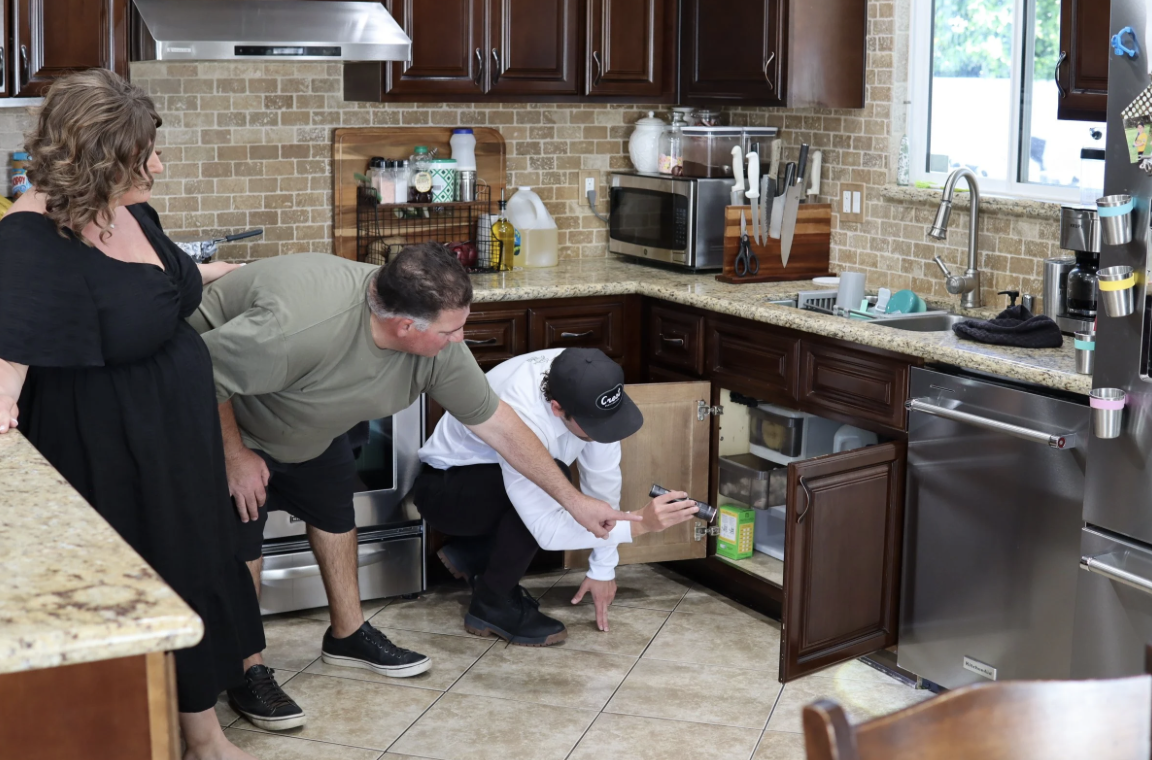
Because the population lives outside and runs on many queens, effective control works from the outside in and targets the colony, not the trail.
That means a treated exterior perimeter that intercepts ants before they reach the house, attention to the moisture and landscaping conditions that draw them, and colony-targeted methods that the workers carry back to the nest rather than repellents that just scatter them. Sealing the obvious entry points and cutting off interior food and water sources removes the reward that keeps them coming.
On the DIY side, the useful moves are the boring ones: fix drips, wipe up trails with soapy water instead of spraying, store sweets sealed, pull mulch and dense plantings back from the foundation, and keep a dry band around the perimeter. Those reduce the pressure. They usually will not end a real supercolony invasion on their own, which is where professional treatment comes in. For a wider look at the ants we see most here, our guide to the most common ant species in Orange County breaks down how each one behaves.
When to call for help
If you have wiped up trails repeatedly and they keep returning, or you are seeing ants in multiple rooms, the colony outside is large and DIY has hit its limit. Ongoing prevention is what keeps Argentine ants out through the seasonal swings that drive them indoors. Our pest prevention plans cover ants with recurring exterior treatment and free retreatments between visits, with no long-term contract. Call us at (949) 943-5000 and we will build a plan around your home.
Frequently asked questions
What are the tiny brown ants all over my California home? They are almost certainly Argentine ants, the most common ant in Southern California. They are small, dull brown, move in steady trails, and appear in very large numbers.
Why do Argentine ants keep coming back after I clean the trail? Because the colony lives outside and runs on many queens. Wiping a trail removes the ants you see but does nothing to the source, so a new trail forms quickly. Durable control has to reach the colony.
Does ant spray work on Argentine ants? No, and it often makes things worse. Contact sprays stress the colony into budding, splitting it into new nests. This scatters the problem instead of solving it. Colony-targeted treatment works better than repellent sprays.
Are Argentine ants dangerous? They do not bite meaningfully or damage wood, so they are more of a nuisance than a hazard. But they contaminate food surfaces and invade in overwhelming numbers, which is why homeowners want them gone.
When are Argentine ants worst in Orange County? During weather swings. Hot, dry stretches and heavy rain both push them indoors in search of water and shelter, so invasions often spike as the seasons change.
