
Summer Ant Invasions: Why They Get Worse in July

If a steady line of ants suddenly appears on your kitchen counter in the middle of summer, here is the short answer: the heat and dryness outside are driving them indoors to find water and food, and they have left a scent trail that pulls the rest of the colony in behind them. Wiping the counter clears the ants you see but not the trail or the nest, which is why they keep coming back. Stopping them for good means treating the colony and breaking the trail, which is the heart of our ant control service. Here is what is happening and how to shut it down.
Why ants invade homes in summer
Ant colonies are most active in warm weather. Through an Orange County summer, three things push them inside.
First, water. Our dry summers leave little moisture outdoors, so ants follow it indoors to kitchens, bathrooms, and around sinks. Second, food. A growing colony needs more to feed on, and your kitchen is a reliable source. Third, sheer numbers. Colonies expand all season, so by July there are simply far more ants foraging than there were in spring.
When one scout finds food or water in your home, it lays down a chemical scent trail on the way back to the nest. Other ants follow that trail straight to the source, which is why a few ants this morning becomes a marching line by tonight.
Why wiping them up does not work
Killing the ants on the counter feels like progress, but it barely dents the problem. The colony living in your wall, under the slab, or out in the yard can hold thousands of ants, and you are only seeing the foragers. Worse, many over-the-counter sprays kill visible ants but scatter the colony, which can split it into multiple nests and make things worse.
The scent trail is also still there after you clean. Until you remove the trail and deal with the nest, fresh foragers keep following the same path in.
What actually stops an ant trail
A few things work together:
Erase the trail. Wipe surfaces with soapy water or a vinegar-and-water mix to break up the scent line ants are following.
Cut off food and water. Store food in sealed containers, wipe up crumbs and spills, fix leaks, and keep sinks dry overnight.
Seal entry points. Caulk gaps around windows, doors, baseboards, and where pipes enter. Ants exploit tiny openings.
Use bait, not just spray. Slow-acting bait gets carried back to the colony and reaches the queen, which is what actually collapses the nest. Spraying the trail only handles foragers.
Doing all of this consistently is what separates a temporary fix from a real one. Different ant species also respond to different approaches, which our guide to the most common ants in Orange County breaks down.
Why Orange County homes see it every year
Our climate is built for ants. Mild winters mean colonies do not get knocked back much, so they come into summer strong. Argentine ants, the most common invader here, form massive interconnected colonies that can stretch across whole neighborhoods, which is why your home and your neighbor's can light up at the same time.
That is also why a one-time treatment rarely holds. Clear your kitchen and a neighboring colony sends in a fresh wave a few weeks later.
When to call Crest
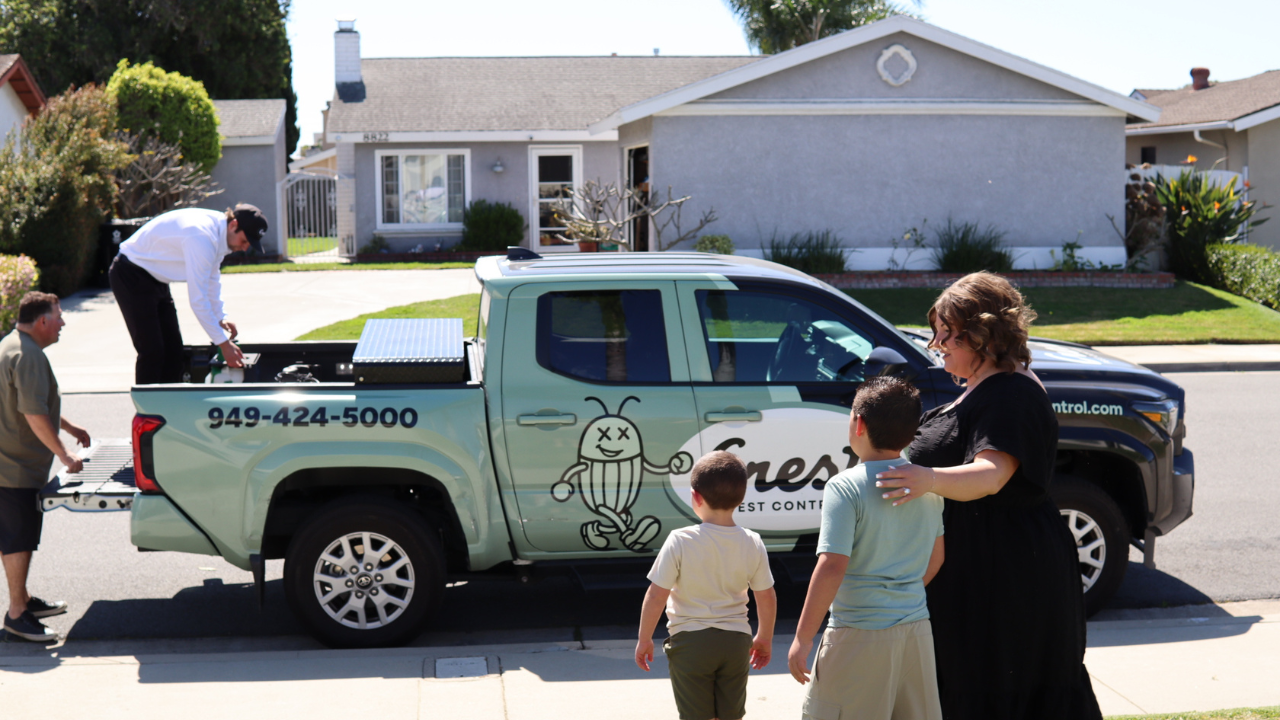
If the trail keeps coming back after you have cleaned, sealed, and baited, or if you are seeing ants in multiple rooms, it is time for professional help. Recurring ant pressure usually means a large or nearby colony that needs to be treated at the source.
We treat the colony, break the trails, and set up an exterior barrier that stops the next wave before it reaches the door. Our prevention plans keep that barrier fresh through the season with recurring service, free retreatments between visits, and no long-term contract. Ants are one of the pests we deal with most around here, so we know where they nest and how they move.
To get ahead of the next trail, call us at (949) 943-5000.
Frequently asked questions
Why do I suddenly have so many ants in my house? A scout ant found food or water and left a scent trail that the rest of the colony is now following. Summer heat and dryness push ants indoors, and growing colonies mean far more foragers, so a small trail can explode quickly.
Will the ants go away on their own? Not usually. As long as there is food, water, and a scent trail leading inside, foragers keep coming. The colony has to be treated and the trail broken for them to stop.
Do store-bought ant sprays work? Sprays kill the ants you see but often miss the colony and can even cause it to split into more nests. Slow-acting bait that ants carry back to the queen is more effective for actually eliminating a colony.
What attracts ants to a clean kitchen? Even a clean kitchen offers water at the sink, crumbs in hidden spots, and sugary residue. In a dry summer, the water alone is enough to draw them in.
How does Crest get rid of ants for good? We treat the colony at the source, break the foraging trails, and maintain an exterior barrier with recurring service so new colonies cannot re-establish a path indoors.
