
Yellow Jackets vs Wasps: How to Tell the Difference
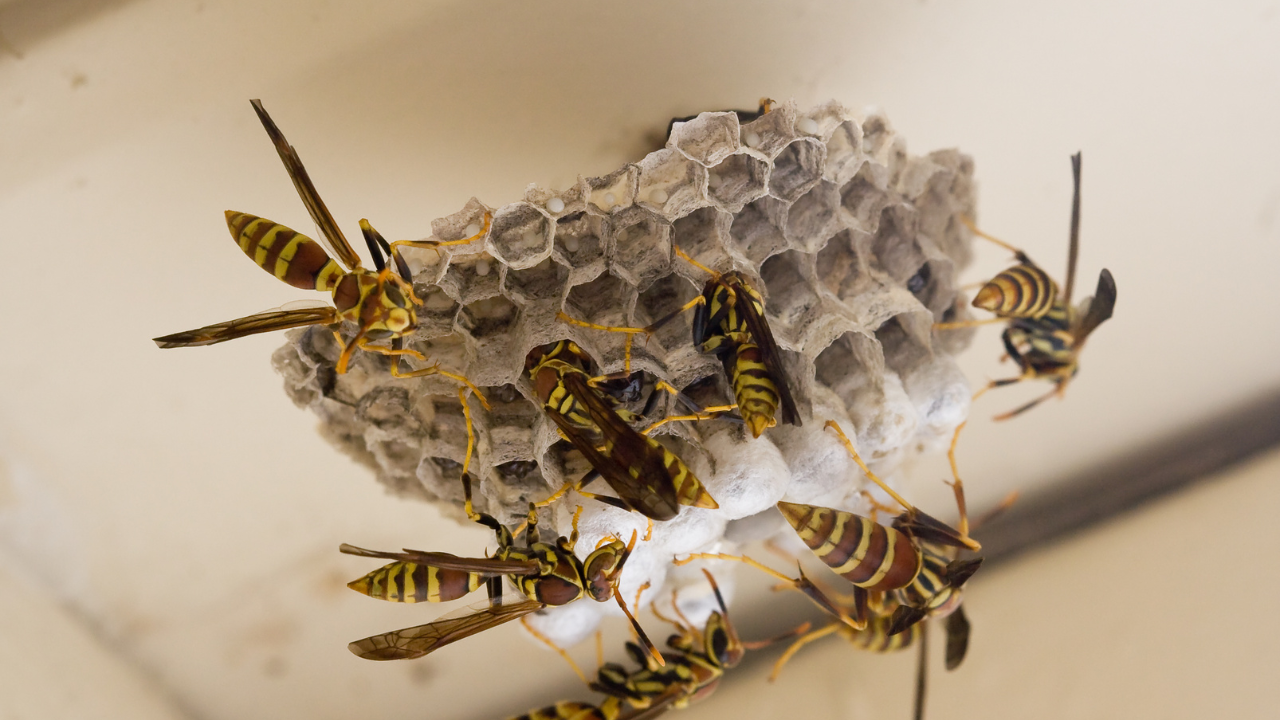
Yellow jackets are a type of wasp, but they are the type you most want to identify correctly, because they are far more aggressive and they nest in places that make removal risky. The quick version: paper wasps are slimmer with dangling legs and build small open nests you can see, while yellow jackets are stockier, faster, and hide their nests in the ground or inside walls. Getting the ID right tells you how careful you need to be, and when to skip the do-it-yourself approach and call our stinging insect control team.
Here is how to tell them apart and why it matters before anyone goes near a nest.
What they look like
At a glance they can blend together, but there are clear tells. Paper wasps are long and slender with a narrow waist and thin legs that hang down when they fly. They are usually brownish with yellow or reddish markings, and their flight is slow and almost floating. Yellow jackets are shorter and more compact, with crisp black and yellow banding and a faster, more direct flight. They tuck their legs in when flying. People often mistake them for bees because of the bold yellow, but they are smooth, not fuzzy. If it looks sleek, moves fast, and has sharp yellow-and-black stripes, treat it as a yellow jacket.
Where they build nests
This is the most important difference for your safety. Paper wasps build open, umbrella-shaped nests you can see, hanging under eaves, patio covers, and door frames. Because the nest is exposed and the colony is usually smaller, paper wasps are easier to spot early. Yellow jackets hide their nests. They nest in the ground, in old rodent burrows, inside wall voids, under decks, and in attic spaces. A yellow jacket colony can grow to thousands of insects, and you often have no idea how big it is because the nest is out of sight. People most often discover one by accident, by mowing over a ground nest or hearing buzzing inside a wall.
How aggressive are they
Paper wasps are relatively docile and usually sting only when they feel the nest is threatened. Yellow jackets are a different story. They are highly defensive, they can sting repeatedly, and they release an alarm signal that calls the rest of the colony to attack. Late in an Orange County summer, when the colony is at its peak and natural food is scarce, they get especially bold around food, trash, and outdoor gatherings. This is why so many late-season sting incidents involve yellow jackets, not paper wasps.
Why yellow jacket nest removal is different
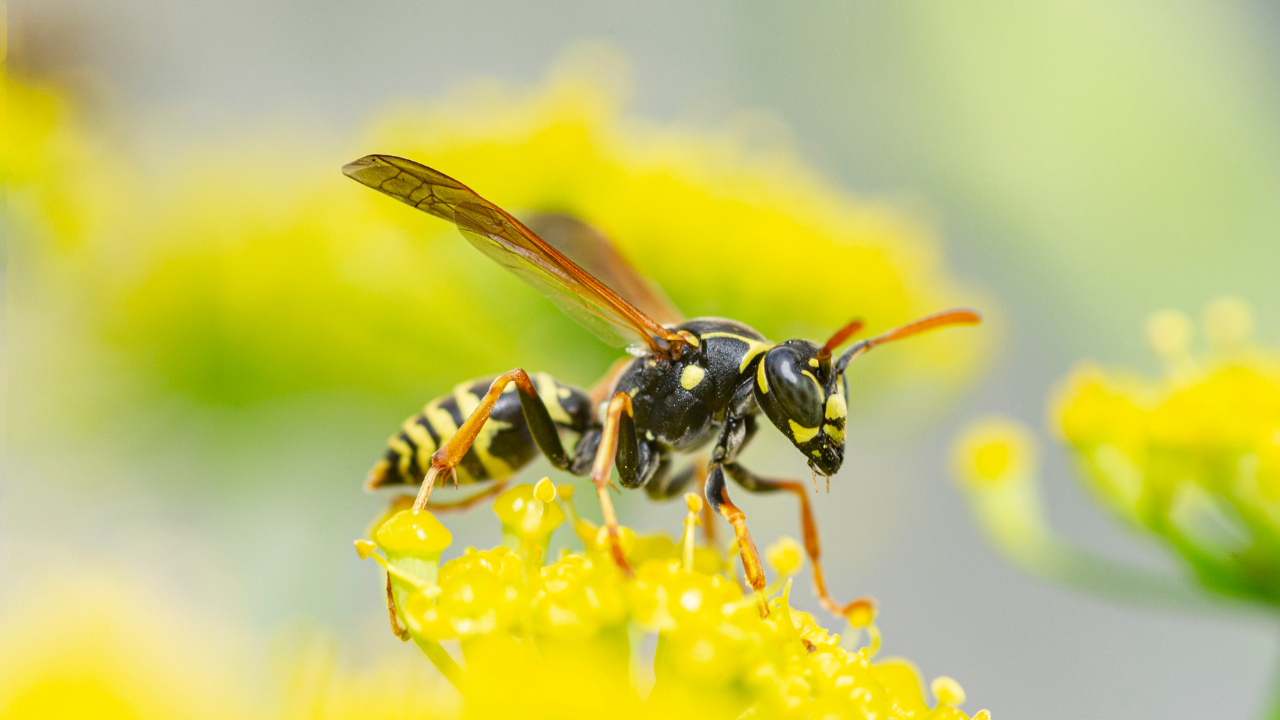
With a small, exposed paper wasp nest, a careful homeowner can sometimes handle it after dark. Yellow jackets are the opposite. Because the nest is hidden and the colony is large and aggressive, disturbing it can trigger a swarm and dozens of stings in seconds. Two things make do-it-yourself yellow jacket removal especially risky: you usually cannot see the full nest, so you cannot tell how big the colony is or where all the exits are; and spraying a visible entry hole often does not reach the nest inside a wall or underground, which leaves an angry colony with a second exit. For ground and in-wall nests, the safe move is a professional treatment that reaches the entire nest at the source. Our guide to staying ahead of summer wasp nests covers prevention for the season, but an active yellow jacket nest is not a wait-and-see situation.
When to call a professional
Call right away if you find a yellow jacket nest in the ground, inside a wall, under a deck, or in the attic, or if you see heavy traffic going in and out of a single small hole. Also call immediately if anyone in your home is allergic to stings. We locate the nest, treat it at the source so the whole colony is handled, and remove what we safely can, working carefully around your family and pets. Then we help keep the area from being re-colonized for the rest of the season.
If you think you have yellow jackets, do not poke at the nest. Call us at (949) 943-5000 or request a free quote and we will take it from there.
Frequently asked questions
Are yellow jackets wasps? Yes. Yellow jackets are a type of social wasp. They are set apart by their compact black-and-yellow bodies, hidden nests, and far more aggressive behavior compared to paper wasps.
How do I find a yellow jacket nest? Watch for a steady stream of insects flying in and out of one spot, often a hole in the ground, a gap in a wall, or under a deck. Do not dig or probe it. Note the location and let a professional handle the rest.
Why are yellow jackets so aggressive in late summer? By late summer the colony is at its largest and natural food sources are drying up, so yellow jackets become more defensive and more aggressive about scavenging human food and drinks. That combination drives most late-season stings.
Can I get rid of a yellow jacket nest myself? It is not recommended. Hidden nests and large, defensive colonies make do-it-yourself removal dangerous, and store-bought sprays often fail to reach the nest inside a wall or underground. A professional treatment is safer and more effective.
Do yellow jackets come back to the same nest? They do not reuse an old nest, but if the conditions are right they will build a new one nearby. Removing the nest and treating the area, plus sealing entry points, helps keep them from returning to the same spot.
