
Why You See More Spiders in Fall (and When to Worry)
If it feels like spiders appeared overnight in September, they did not. They were already living around your house all summer. What changed is that fall is mating season, so the males that spent the year hidden are now out walking around looking for females, and a lot of that walking happens across your living room floor. Most of what you are seeing is harmless. Two species are worth taking seriously, and we cover both below, along with what actually reduces the count. Our spider control service handles the treatment and web removal side if you would rather not deal with it.
The short version: more spiders indoors in fall is normal here, it is not a sign your house is dirty, and it peaks and then fades.
Three things happen at once in the fall
Spider activity spikes in September and October for reasons that stack on top of each other.
First, it is breeding season for most of the common house spiders in Southern California. Mature males leave their webs and roam to find mates. They are not looking for your house, they are looking for a female, and your house is in the way.
Second, their food supply peaks. Late summer and fall is when flies, moths, gnats, and mosquitoes are thickest. Spiders follow insects, and insects follow your porch light. A bright entry light is one of the most effective spider attractants you can install.
Third, the weather turns. Cool nights and the October Santa Ana winds push insects toward sheltered spots, which means garages, patio covers, doorways, and window frames. The spiders go where the insects go.
None of that means an infestation. It means the season peaked.
The ones you will actually see
Most spiders in an Orange County home fall into a few groups, and knowing which is which takes the edge off.
Cellar spiders are the long, thin-legged ones in garage corners and under sinks. Harmless. American house spiders build the messy cobwebs in ceiling corners and are also harmless. Jumping spiders are small, stocky, and move in quick bursts. They do not build webs and are not a threat. Wolf spiders are the big fast brown ones that run across the floor at night and startle people. They will bite if handled but they are not dangerous, and they are usually the ones people call about in September.
We wrote a fuller identification guide with photos: the most common spiders found in Southern California homes. If you want to put a name to what you found, start there.
When to worry: black widows and what people think are recluses
Two things deserve real attention.
Black widows are common in Orange County and they are the one to respect. Look for a glossy black body with a red hourglass on the underside of the abdomen, in a tangled, irregular web. They like undisturbed low, dark places: under patio furniture, in garage clutter, inside meter boxes and irrigation valve boxes, behind stored planters, in the gap under a BBQ. Their bite is medically significant and needs care, especially for kids and pets. If you have widows around the yard, that is worth treating rather than ignoring.
The other one is the brown recluse, and here the honest answer is that it is almost never what you have. Brown recluse spiders are not established in California. What people usually find is a common brown spider, a wolf spider, or occasionally a desert recluse from further inland. If you were bitten and the wound is worsening, see a doctor rather than trying to identify the spider from the bite, because bite wounds are not reliable identification.
Beyond those, the honest read is that the spiders in your house are doing you a small favor by eating other insects. That does not mean you have to live with them.
What actually lowers the number
Spray alone is the least effective thing you can do, because most of these spiders are not walking across treated surfaces. What works is removing the reasons they are there.
Change the porch lights. Swapping white bulbs for warm yellow or LED bulbs at entry doors and in the garage cuts the insects those lights pull in, and fewer insects means fewer spiders. It is the cheapest fix on this page and usually the one that makes the biggest difference. A bulb costs about fifteen dollars.
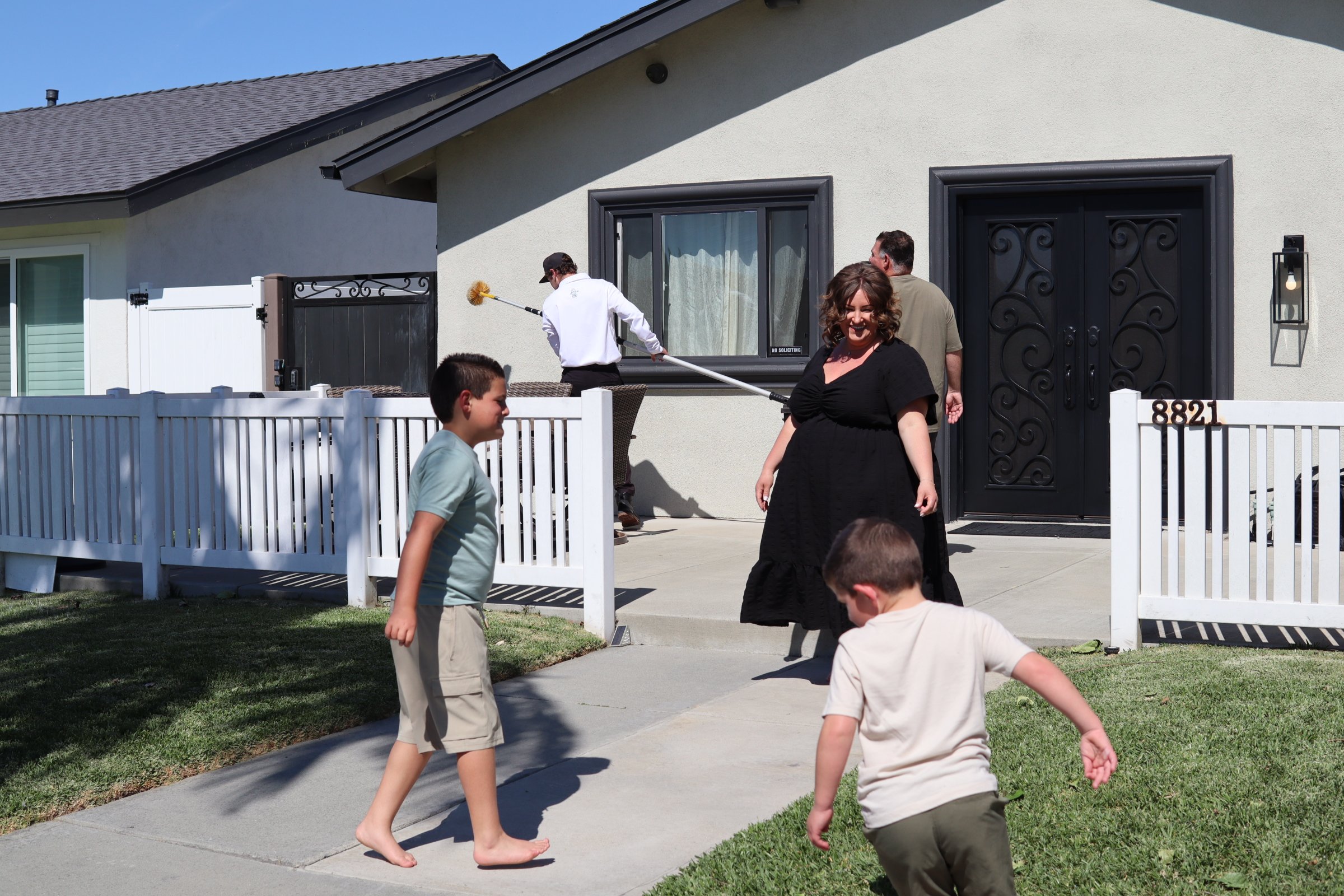
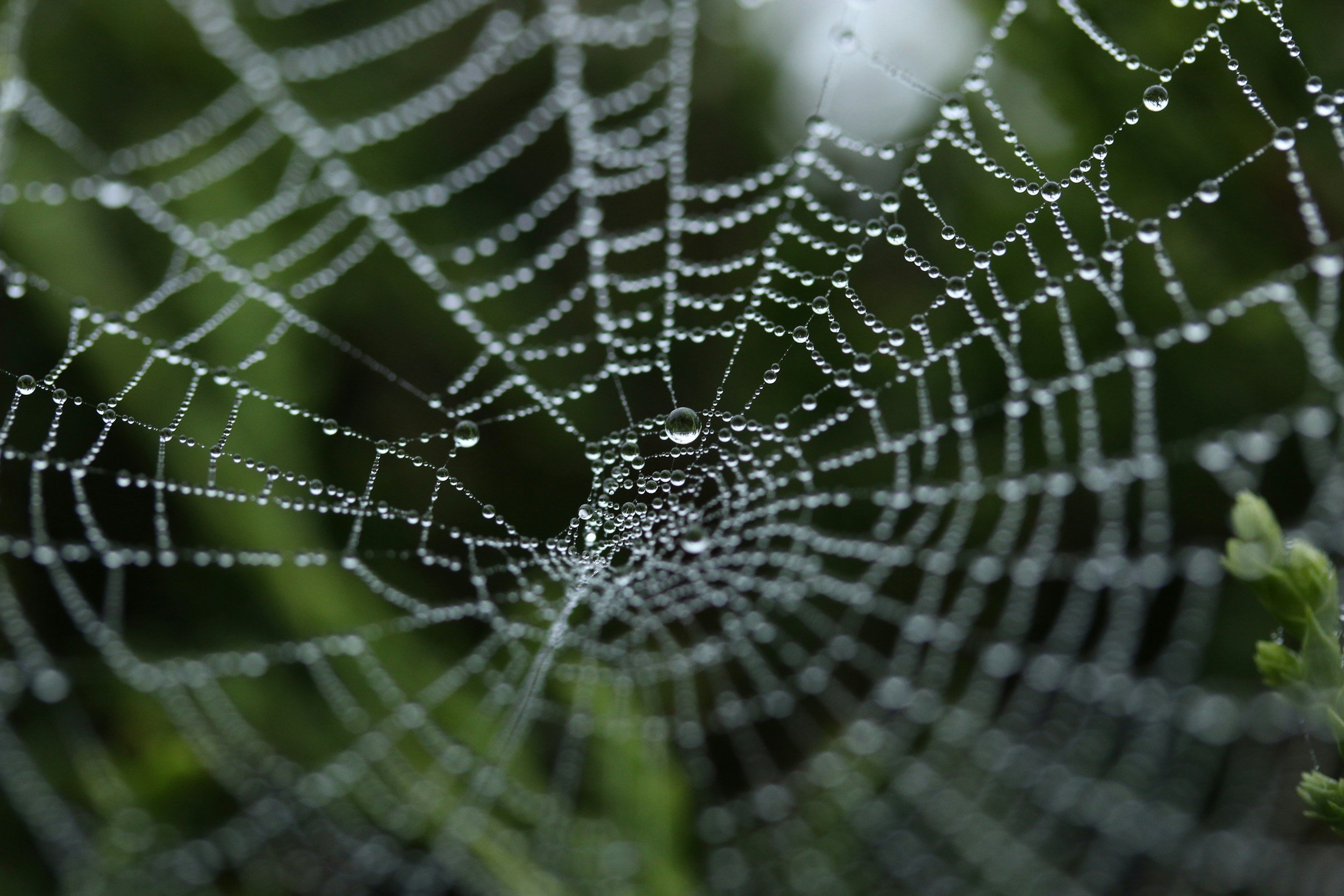
Knock the webs down, then keep knocking them down. A web left in place keeps catching insects, which keeps the spider fed and holds it in position. Clearing eaves, patio covers, doorframes, window frames, and outdoor kitchens on a schedule breaks that. This is why web removal is part of every one of our recurring visits rather than a one-time job.
Then close the easy routes in. Fix torn window screens, replace worn weatherstripping under doors, and seal gaps around exterior pipes and vents. Clear the clutter that widows like, especially in the garage and along the side yard.
Vacuum rather than spray indoors. It removes the spider, the web, and any egg sacs in one go, and egg sacs are what turn one spider into thirty.
How to tell a season from a problem
There is a line between normal fall activity and something that needs treating. If you are seeing a few spiders a week, mostly single males walking, and no webs rebuilding in the same spots, that is the season. If you are finding webs back within days of clearing them, seeing egg sacs, or turning up black widows in places your family and pets use, that is a problem worth handling.
If you are not sure which side of the line you are on, here is how to tell whether you have a spider problem.
How we handle spider season
Spiders are the pest we get called about most, and our approach is not complicated. We treat the exterior perimeter and the harborage spots, remove webs by hand from eaves, patios, and entryways, and treat inside only where it is needed. Then we come back, because one visit in October does not stop a season that runs into November. That recurring rhythm is what the pest prevention plan exists for, and ants and spiders are exactly what it was built around.
Our technicians average about ten years in the field, and in fall the difference between a good visit and a wasted one is usually whether someone actually got up under the eaves and into the patio cover instead of walking the perimeter with a sprayer.
If the count in your house is bothering you, call (949) 943-5000 or request a free quote and we will take a look.
Frequently asked questions
Why are there suddenly so many spiders in my house?
Fall is mating season, so mature males leave their webs and roam looking for females. At the same time their insect food peaks and cooling weather pushes both insects and spiders into sheltered spots like garages and doorways. It is seasonal, not a sign of a dirty house.
How long does spider season last in Southern California?
Activity usually climbs through September, peaks in October, and tapers off through November as breeding finishes and insect numbers fall.
Does killing spiders attract more spiders?
No. That is a myth. What draws more spiders is leaving webs and egg sacs in place and keeping bright lights on at your doors, because both keep the food supply and the shelter available.
Are house spiders in California dangerous?
Most are not. Cellar spiders, house spiders, and jumping spiders are harmless. Black widows are the real concern locally and their bite needs medical attention. Brown recluse spiders are not established in California, despite how often they get blamed.
What smell keeps spiders away?
Peppermint and citrus oils get recommended a lot and they are weak, short-lived deterrents at best. Changing your porch lighting, clearing webs regularly, and sealing entry points do far more.
Should I get pest control just for spiders?
If webs rebuild within days, you are finding egg sacs, or you have black widows near where your family and pets spend time, yes. A few wandering spiders in October usually just needs a vacuum and a bulb change.
