
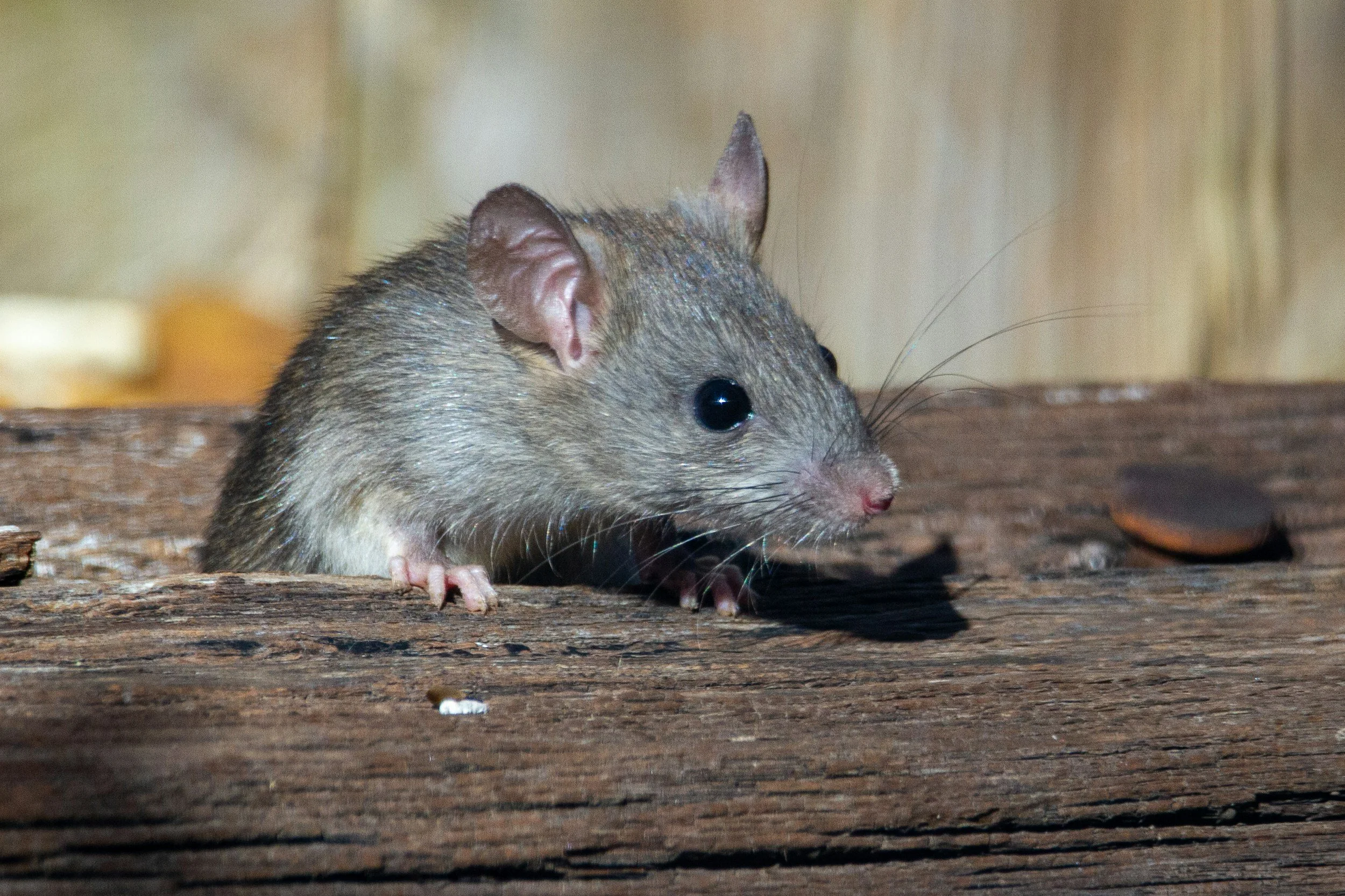
If you are hearing scratching or quick footsteps over the ceiling after dark, there is a good chance you have rats in the attic.
In Orange County that is almost always the roof rat, a climber that gets up there by the trees, fences, and utility lines around your house. Getting rid of them takes three steps in a specific order: confirm what you have, remove the rats already inside, then seal every way back in.
Skip a step and they come back. This guide walks through each one, and our rodent control and exclusion service handles all three if you would rather not go up there yourself.
How to tell it is rats and not something else
Squirrels and birds use attics too, so start by checking what you are dealing with.
Timing. Rats come out at night. Noise that starts around dusk and goes quiet by morning points to rats. Noise at sunrise and through the day is more likely a squirrel or birds.
Droppings. Rat droppings are dark, roughly half an inch long, and show up in clusters along the paths rats travel. Roof rat droppings tend to have pointed ends. If you are unsure, here is how to tell rat droppings from mouse droppings.
Runways. Look for flattened tunnels through the insulation, especially along the edges of the attic where the roof meets the walls.
Grease marks. Rats travel the same routes over and over, and the oil in their fur leaves dark smudges on beams, pipes, and around openings.
Gnawing. Chewed wire insulation, chewed duct wrap, or shredded material pulled into a nest.
Find two or more of these and you can stop wondering.
Why rats end up in Orange County attics
Rats move indoors when it cools down because the attic gives them warmth, shelter, and no predators, and food and water are a short trip away. We explain the full seasonal pattern in why rodents move indoors as OC temperatures drop.
The attic in particular is a roof rat thing. Roof rats nest high. Outdoors they live in palm trees, dense ivy, bougainvillea, and fruit trees, which describes a lot of yards here. From there a branch touching the roof or a power line running to the eave is all it takes. If you want to know more about the species itself, read our guide to roof rats in Southern California.
Step 1: Find how they are getting in
Before setting a single trap, find the entry points. A rat can squeeze through a gap about the width of a quarter. The usual suspects on Orange County homes:
Gaps where the roofline meets the fascia, and open spots behind gutters
Roof and gable vents with torn or missing screens
Gaps around pipes, AC lines, and cable lines where they enter the house
Tile roofs, where the open ends of the first row of tiles at the eave give direct access
Chimney caps and the gaps around them
Walk the outside of the house in daylight and look up. Fresh rub marks, droppings on a ledge, or a gap that looks chewed tell you which openings are in use.
Step 2: Remove the rats already inside
Use snap traps, not poison, in the attic. Poison feels like the easy option, and it is the one people end up regretting. A rat that eats poison does not die on cue somewhere convenient. It dies in a wall void or under the insulation, and you live with the smell for weeks. Traps let you confirm each catch and remove it.
Set traps along the runways you found, flush against walls and beams, since rats follow edges rather than crossing open space. Bait with something they want: peanut butter, nuts, or dried fruit work. Set several, not one. Check them every day and wear gloves when you handle them.
Keep trapping until the noise stops and the traps stay empty for several days in a row.
Step 3: Seal every entry point
This is the step that decides whether you are doing this again next fall. Once the activity stops, close every opening you found, using materials rats cannot chew through:
Hardware cloth or heavy-gauge metal mesh over vents and larger gaps
Copper or steel mesh packed into gaps around pipes and lines, then sealed
Bird stops or eave closures for the open ends of roof tiles
Metal flashing for chewed corners and fascia gaps
Expanding foam and caulk alone will not hold. Rats chew straight through them.
Then cut the bridges. Trim tree branches back so they are well clear of the roof, and pull ivy and vines off walls and fences that lead up to the eave.
If this is the point where you are looking at your ladder and your roof pitch and having second thoughts, that is reasonable. Exclusion work on a two-story roofline is the part of rat removal that pays to hand off. You can book a rodent inspection here and we will show you exactly what we find.
Step 4: Clean up safely
Rat droppings and urine can carry disease, so cleanup needs care. The CDC's guidance:
Open the attic and let it air out for at least 30 minutes before you work.
Wear rubber or plastic gloves.
Spray droppings and nesting material with a disinfectant or a mix of 1 part bleach to 10 parts water, and let it soak for about five minutes.
Wipe it up with paper towels and bag it.
Do not sweep or vacuum droppings. That puts particles in the air.
Heavy activity can soil the insulation badly enough that it needs replacing. If the insulation is matted down in large areas or the smell lingers after cleanup, have it looked at.
What our rodent service includes

When we handle an attic rat problem, the process follows the same order as above. We inspect inside and out to find the activity, nesting areas, and entry points. We set interior traps, matched to how much activity there is. We seal the smaller entry points as part of the service and offer full exclusion for the larger ones. Your first service includes three complimentary trap checks.
Outside, we can place exterior bait stations to bring down the rat population around the property. They are locked with a key so pets and kids cannot get into them. They will not make every rat in the neighborhood disappear, especially if you back up to hills or have palm trees nearby, but they reduce the pressure on your house. They help most on homes near open space and mature trees, which describes a lot of Irvine and Newport Beach.
And if rodents come back during your guarantee period, we come back at no charge. See the cities we serve across Orange County and the Inland Empire.
Get them out before they settle in
Rats in the attic do not leave on their own once they have a warm spot and a route to food. The longer they stay, the more insulation and wiring they damage. If you are hearing them now, request your free quote or call (949) 943-5000 and we will come find out how they are getting in.
Frequently asked questions
How do I know if I have rats in my attic?
Scratching or running noises at night, droppings about half an inch long, tunnels through the insulation, dark grease marks on beams, and chewed wires are the common signs. Two or more of these together is a strong indication.
How do rats get into the attic?
Mostly from above. Roof rats climb trees, fences, and utility lines, then enter through gaps at the roofline, damaged vent screens, the open ends of roof tiles, or gaps around pipes and AC lines.
Should I use poison to get rid of rats in the attic?
We do not recommend it inside the house. Poisoned rats often die in walls or under insulation where you cannot reach them, and the odor can last for weeks. Snap traps in the attic and locked bait stations outside are the safer combination.
Will rats leave the attic on their own?
Rarely. An attic gives them warmth, shelter, and safety, and they will stay as long as they can reach food and water. Removing them and sealing the entry points is what ends it.
How long does it take to get rid of rats in the attic?
It depends on how many there are and how many entry points the house has. Trapping continues until the activity stops, and the job is not finished until the openings are sealed.
Is it safe to clean up rat droppings myself?
Yes, with precautions. Air out the space, wear gloves, soak droppings with a bleach solution before wiping them up, and never sweep or vacuum them. For heavy contamination, professional cleanup is the safer choice.
